
现在加入 VIP,即可提前预购,享受更低价格、回扣和积分奖励!
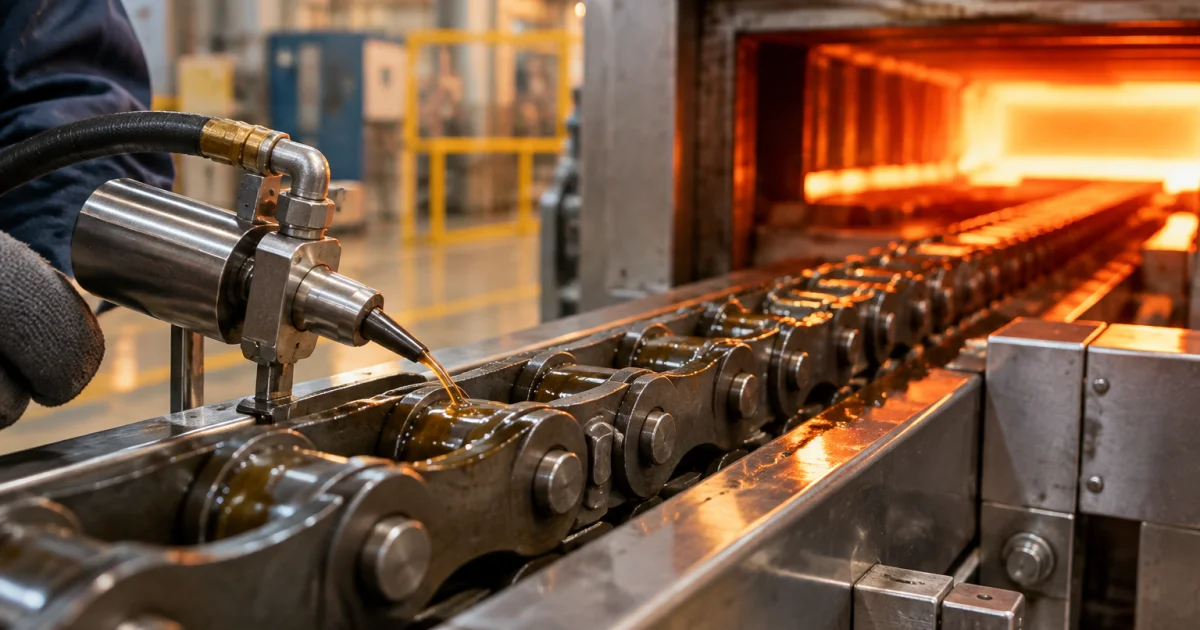
High Temperature Chain Oil: A Beginner’s Guide to Reducing Smoke, Drip, and Chain Wear
10 月 28, 2026
Oven conveyors, drying lines, and other heated chain systems are unforgiving. When the lubricant is wrong—or applied the wrong way—you typically see the same issues: smoke or odor near the oven entrance, oil dripping onto product or floors, and chains that elongate and wear faster than expected.
This beginner guide offers a practical selection and application path for High Temperature Chain Oil. It focuses on what maintenance teams can verify on-site (temperature, chain speed, contamination, application method) and what to request from suppliers (technical data, compatibility, documentation) to reduce smoke, drip, and wear without over-lubricating.
1) What “high-temperature chain oil” actually means (and why normal oils fail)
In heated conveyors, the lubricant faces more than heat: hot airflow, metal-to-metal contact at pins and bushings, oxidation, and contamination from dust, fibers, powders, or process vapors. Oils that perform well at ambient conditions often fail in hot zones.
Common failure modes with general-purpose oils on oven chains:
- Evaporation and smoking: light fractions volatilize near the heat source, creating smoke/odor before the oil reaches the pin/bushing interface.
- Drip and fling-off: viscosity can drop too far at operating temperature (or the dose is too high), causing migration, dripping, or sling-off on faster chains.
- Varnish and carbon deposits: thermal/oxidative breakdown forms varnish and coke, restricting articulation and increasing load and wear.
- Dry joints and elongation: when oil can’t stay in the joint, friction rises and pin wear accelerates (“chain stretch”).
A purpose-built high-temperature chain lubricant targets thermal stability, oxidation resistance, deposit control, and adequate film strength at elevated temperature. The aim is the right oil, applied correctly and sparingly, with minimal residue.
2) A beginner-friendly selection checklist (what to ask and what to verify)
Start by documenting the reality of your line before requesting quotes or recommendations:
- Where the chain runs hot: the highest metal temperature (not only the oven setpoint), especially near entrance/exit and inside the heated zone.
- Chain type and load: roller, hollow pin, overhead trolley, or special conveyor chain; note load, speed, and duty cycle.
- Current symptoms: smoke, odor, dripping, residue build-up, stiff links, noise, frequent tension adjustments, contamination concerns.
- Application method: manual, drip, brush, spray, or automatic; confirm whether oil actually reaches pins/bushings.
Key specifications that matter
“High temp” claims vary by supplier. Ask for usable detail and test data when available:
- Recommended operating temperature range (continuous vs intermittent exposure).
- Viscosity grade and how viscosity changes with heat (penetration at application point, film at operating temperature).
- Volatility / tendency to smoke at your application temperature.
- Oxidation resistance and deposit control (varnish/coke formation).
- Compatibility with seals, plastics, nearby coatings, and (if switching) the previous lubricant.
- Documentation (technical datasheet and SDS) for approvals and safe handling.
If your process is contamination-sensitive (electronics, precision manufacturing, food-related packaging lines), also clarify limits on odor, misting, staining, and residue. Keep requirements observable: “Minimal smoke at the oven entrance, and no dripping onto product.”
Don’t confuse chain oil with other high-temperature products
Plants may also use high temperature release agents (to prevent sticking on surfaces) and high temperature copper paste (anti-seize for fasteners). These are not substitutes for chain lubrication. If sticking/build-up is a separate process issue, a release product can be used in parallel—but keep functions and specifications separate. For a starting point on release coatings, see Sk 303 High Temperature Release Spray.
3) Application basics: how to reduce smoke and drip without starving the chain
Even a good oil can smoke or drip if applied incorrectly. A common mistake is lubricating where it’s easy to reach rather than where it protects the joint.
Lubricate the joint, not the outside plates
The critical friction points are pin-to-bushing (and sometimes bushing-to-roller). Oil on outer plates may look reassuring but does little for wear. Apply so oil can wick into the joint—often on the inside of the return strand before the chain enters the heated zone (depending on design and safety controls).
Use “minimum effective quantity” as your target
In hot zones, excess oil increases smoke, drip, and deposits. Instead:
- Start low and increase only if you still see dry joints, noise, or rising chain temperature.
- Look for stability: smoother articulation, consistent sound, and no visible wet oil slinging off.
- Adjust frequency before volume on automatic systems; small frequent doses are often cleaner than large infrequent shots.
Control overspray and heat soak
With spray systems, keep the pattern tight. Overspray on guards, insulation, or oven surfaces can bake into odor and residue. Also avoid routing nozzles/lines too close to heat sources; overheating the lubricant before application can raise volatility and smoking.
Practical signs you’re over- or under-lubricating
| Observation | Likely cause | Adjustment |
|---|---|---|
| Visible smoke/odor at entrance shortly after oiling | Too much oil, oil too volatile, or applying in the hottest zone | Reduce dose, move application to a cooler pre-heat area, consider higher thermal stability oil |
| Oil dripping onto floor/product | Over-application or viscosity too low at temperature | Lower feed rate, verify correct viscosity, aim nozzle/brush to the joint |
| Stiff links, dark sticky residue | Oxidation/deposit build-up, dirty chain, incompatible top-ups | Clean chain, switch to deposit-controlling oil, avoid mixing lubricants |
| Noisy chain, rapid tension changes, hot bearings near chain | Under-lubrication or oil not reaching pins/bushings | Improve delivery to joint, increase frequency slightly, verify applicator condition |
4) Cleaning and changeover: stop cooking old residue into new problems
If a chain has been smoking for months, the biggest problem may be what’s already on it: oxidized oil, varnish, dust-cemented deposits, and carbon. Adding fresh oil on top can temporarily soften residue, but it can also form a sticky abrasive paste that accelerates wear and blocks oil entry into the joint.
When to clean before switching oils
Plan a chain cleaning step if you see:
- Stiff links or uneven articulation
- Thick black deposits near the oven entrance/return path
- Frequent clogging of oil channels/nozzles
- New oil turning dark and tacky quickly
Cleaner selection: what “industrial chain cleaner” should do
A suitable chain cleaner should dissolve oxidized residue and lift contaminants without harming components. In Thailand, teams often search for related products such as conveyor chain cleaner or sourcing terms like Industrial Chain Degreaser Thailand to find locally available options with proper documentation and handling guidance.
For a dedicated option, consider Sk 189 Industrial Chain Cleaner as a starting point to discuss with your supplier and safety team. Follow site safety rules, ventilation requirements, and the product SDS.
Changeover tips (beginner-safe)
- Avoid mixing lubricants: unknown base chemistries can change viscosity/solvency and worsen deposits.
- Clean, then re-lubricate gradually: restart with conservative feed rates and monitor for dry joints.
- Confirm applicator condition: clogged brushes, worn nozzles, or misalignment will waste oil and mask product performance.
5) Troubleshooting chain wear and deciding when to buy a different lubricant
“Do we need a better oil, or a better method?” is usually answered with both. Use the checks below to find the limiting factor first.
Step-by-step troubleshooting path
- Verify temperature reality: measure/estimate actual chain temperature at the hottest section; oven setpoint alone can mislead.
- Check delivery to the joint: confirm oil reaches pins/bushings, not only side plates.
- Reduce excess first: if smoke/drip is the main complaint, lower feed rate and adjust location before changing products.
- Inspect deposits: heavy varnish/carbon suggests breakdown, overheating, or poor deposit control.
- Assess wear pattern: rapid elongation despite correct delivery may indicate need for different viscosity, higher film strength, or higher thermal stability.
When a different product category is the right fix
Not every hot-area problem is solved by chain oil:
- Seized bolts, pins, or adjusters near heat: a penetrating oil spray can help disassembly (separate from running lubrication).
- Fasteners exposed to high heat: copper paste (anti-seize) helps prevent galling during assembly, but is not a running chain lubricant.
- Sticking on molds/fixtures: a high-temperature release agent addresses sticking without replacing chain oil.
Separating these categories reduces trial-and-error and helps procurement compare the right specifications.
6) What to request when sourcing in Thailand (so procurement and maintenance align)
Sourcing goes smoother when you standardize what suppliers must provide and what “success” looks like on the line.
For each candidate lubricant, request:
- Technical datasheet with operating temperature guidance, viscosity, and application notes.
- SDS for EHS review and storage/handling requirements.
- Compatibility notes (seals/plastics and whether it can follow the current oil).
- Recommended application method (manual, drip, brush, spray, auto-lube) and a suggested starting feed approach.
- Cleaning recommendation if deposits are present, including a suitable chain cleaner/degreaser option.
Align internally on observable criteria: less smoke at the oven entrance, fewer drips, cleaner guards, more stable tension intervals, smoother articulation, and slower residue build-up over time.
Conclusion
Reducing smoke, drip, and chain wear in heated conveyors is usually achievable with a straightforward plan: confirm real operating temperature, ensure oil reaches the pin/bushing interface, apply the minimum effective quantity, and remove old deposits before they become baked-in problems. With those basics in place, selecting and tuning a high-temperature chain lubricant becomes far more predictable.
When evaluating options, treat it like an engineering decision: request documentation, match the product to your temperature and application method, and adjust feed rate deliberately. The right oil and a clean, well-aimed delivery setup typically pay back through cleaner operation and more consistent maintenance.
常见问题
How do I choose the right viscosity for a hot conveyor chain?
Start with your actual chain temperature and your application method. You need an oil thin enough to penetrate pins/bushings at the point of application, but stable enough to maintain a protective film at operating temperature. If you see drip and fling-off, viscosity may be too low at temperature or the feed rate is too high. If you see noise, rapid elongation, or dry joints, oil may be too light, breaking down, or not reaching the joint.
Why does my chain smoke right after lubrication?
Common causes are over-application, applying too close to the hottest zone, or using a lubricant with high volatility at your operating temperature. Reduce the dose first, then adjust the lubrication point to a cooler pre-heat area where the oil can wick into the joint before heat soak. If smoke persists, consider switching to a lubricant designed for higher thermal stability and lower tendency to evaporate.
Do I need to clean the chain before switching to a new high-temperature chain oil?
If there is sticky varnish, black carbon, stiff links, or frequent nozzle clogging, cleaning is strongly recommended. Old oxidized residue can prevent new oil from entering the joint and can form abrasive paste when softened. Use a suitable conveyor chain cleaner, follow the SDS and site safety rules, and restart lubrication with a conservative feed rate while monitoring articulation and residue.
Is a penetrating oil spray a substitute for chain lubricant on heated conveyors?
No. Penetrating oil sprays are primarily for freeing seized parts during maintenance (bolts, pins, adjusters) and are not designed to provide long-term lubrication in hot running chain joints. After maintenance, use the correct high-temperature chain lubricant for ongoing operation.
What should procurement ask suppliers for when buying high-temperature chain lubricants in Thailand?
Request a technical datasheet, SDS, stated operating temperature guidance, viscosity information, compatibility notes (including whether it can follow the current oil), and application recommendations for your lubrication method. If deposits are a concern, also ask for a compatible chain cleaning/degreasing approach so maintenance and procurement can evaluate the full solution, not just the oil.
Source high-temperature chain lubrication and cleaning with A-Isou
If you’re troubleshooting smoke, drip, or fast chain wear on ovens and heated conveyors, A-Isou helps you source the right industrial maintenance products from multiple suppliers in one place. Compare specifications, request documentation (datasheets/SDS), and align on options for chain lubrication, conveyor chain cleaning, and other plant-maintenance chemicals—so your team can standardize a cleaner, more reliable process.
